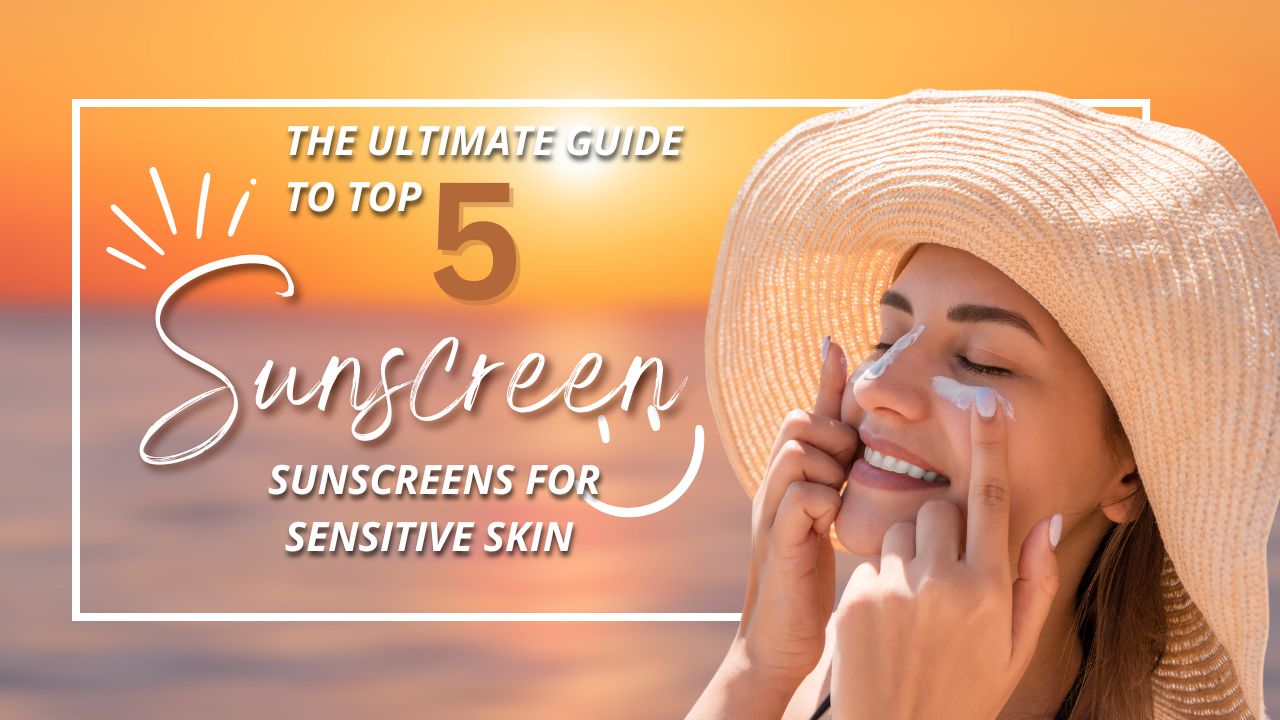
The Ultimate Guide to the top 5 Sunscreens for Sensitive Skin (Dermatologist Approved 2025)
Finding the best sunscreen for sensitive skin isn’t about luck; it’s about understanding what to look for and which trusted formulas dermatologists consistently recommend. You’re left asking: Is it even possible to find a sunscreen that protects without causing a reaction?
The answer is a resounding yes.
This in-depth guide will cut through the confusion, offering expert-backed product recommendations and practical advice to help you enjoy the sun safely and comfortably.You slather on sunscreen to protect yourself, only to end up with stinging, red, irritated skin that feels worse than a sunburn.
Why is Sunscreen Non-Negotiable for Sensitive Skin?
Sensitive skin is more reactive to environmental aggressors and product ingredients. Ultraviolet (UV) radiation is one of the most potent aggressors there is. According to the Skin Cancer Foundation, daily use of an SPF 15 or higher sunscreen can reduce your risk of developing squamous cell carcinoma by about 40% and melanoma by 50%.
For sensitive skin, the stakes are even higher. UV exposure can:
- Worsen conditions like rosacea and eczema.
- Lead to immediate redness and flushing.
- Cause post-inflammatory hyperpigmentation (dark spots), which can be more pronounced and longer-lasting on reactive skin.
Sunscreen is your first and most important line of defense. It’s not just an anti-aging product or a beach-day essential; it’s a critical component of your daily health routine.
Mineral vs. Chemical Sunscreen: What’s Best for Sensitivity?
This is the most critical distinction for anyone with reactive skin.
- Chemical Sunscreens (containing ingredients like oxybenzone, avobenzone, octinoxate, homosalate): These work by absorbing UV radiation, converting it into heat, and releasing it from the skin. This chemical reaction can generate heat and cause irritation, stinging, and redness in sensitive skin types.
- Mineral Sunscreens (containing Zinc Oxide and/or Titanium Dioxide): Often called “physical” sunscreens, these ingredients sit on top of the skin and act like a shield, reflecting and scattering UV rays away from the skin. They are:
- Less irritating: They are inert minerals, meaning they are much less likely to cause a reaction.
- Broad-spectrum by nature: Zinc oxide, in particular, is known for providing excellent protection against both UVA (aging) and UVB (burning) rays.
- Effective immediately: Unlike chemical sunscreens, which need about 20 minutes to become effective, mineral sunscreens work the moment you apply them.
Dermatologist Verdict: For sensitive, acne-prone, or rosacea-prone skin, mineral sunscreens are overwhelmingly the preferred choice.
Key Features to Look For in a Sensitive Skin Sunscreen
When you’re scanning the aisle or shopping online, use this dermatologist-approved checklist:
- Mineral-Based Formula: Look for Zinc Oxide or Titanium Dioxide as the active ingredients.
- Broad-Spectrum Protection: This ensures protection from both UVA and UVB rays. SPF only measures protection from UVB.
- SPF 30 or Higher: The American Academy of Dermatology recommends a water-resistant, broad-spectrum sunscreen with an SPF of 30 or higher.
- Fragrance-Free: Not just “unscented”—look for “fragrance-free” on the label. Artificial fragrance is a leading cause of allergic contact dermatitis.
- Non-Comedogenic: This means the formula is designed not to clog pores, which is crucial for those with acne-prone sensitivity.
- Soothing Additives: Ingredients like niacinamide, aloe vera, ceramides, and colloidal oatmeal can help calm and reinforce the skin’s barrier.
Top Dermatologist-Approved Sunscreens for Sensitive Skin
After reviewing countless dermatologist recommendations and user reviews, these formulas consistently come out on top.
1. EltaMD UV Clear Broad-Spectrum SPF 46
A cult-favorite for a reason. This oil-free, lightweight lotion is a dream for acne-prone and sensitive skin types. It’s formulated with 5.5% transparent zinc oxide and key calming ingredients.
- Key Benefits: Contains niacinamide (Vitamin B3) to reduce redness and lactic acid to help with hydration and clarity. It’s silky, never leaves a white cast, and is a perfect base under makeup.
- Best For: Those with rosacea, acne, and hyperpigmentation.
2. La Roche-Posay Anthelios Mineral Ultra-Light Fluid SPF 50
This sunscreen from a beloved dermatologist-trusted brand offers high protection in an incredibly elegant, fluid texture. It’s formulated with their signature antioxidant-rich thermal spring water to soothe skin.
- Key Benefits: Ultra-lightweight, matte finish that feels like nothing on the skin. Fragrance-free, paraben-free, and oil-free. It’s also water-resistant for 40 minutes.
- Best For: Everyday wear for those who hate the feeling of heavy sunscreen.
3. CeraVe Hydrating Mineral Sunscreen SPF 50
CeraVe is a hero brand for sensitive skin, and this sunscreen is no exception. It’s packed with essential ceramides and hyaluronic acid to restore and maintain the skin’s natural barrier while protecting it.
- Key Benefits: Deeply hydrating without being greasy. The ceramide complex is ideal for those with dry, sensitive, or eczema-prone skin. It’s also affordable and widely available.
- Best For: Dry to very dry sensitive skin.
4. Aveeno Positively Mineral Sensitive Skin Sunscreen SPF 50
Aveeno harnesses the power of colloidal oatmeal, a skin-protective ingredient certified by the National Eczema Association, to soothe and relieve irritated skin.
- Key Benefits: Calms skin while protecting it. It’s hypoallergenic, oil-free, and water-resistant for up to 80 minutes, making it a great family option for a day at the pool.
- Best For: Those with eczema or easily irritated skin.
5. Neutrogena Sheer Zinc Oxide Dry-Touch Sunscreen SPF 50
A drugstore gem that provides pure mineral protection. This formula uses 100% zinc oxide and is designed to avoid PABA, phthalates, dyes, and irritating chemicals.
- Key Benefits: Hypoallergenic and clinically proven for sensitive skin. The Dry-Touch technology helps it absorb quickly for a clean feel.
- Best For: A budget-friendly, highly effective mineral option.
FAQs: Your Sunscreen for Sensitive Skin Questions, Answered
Q: Why does sunscreen burn my face when I apply it?
A: This stinging sensation is often caused by the chemical filters (like oxybenzone or avobenzone) or alcohol in many sunscreens. Your skin’s barrier is likely compromised or inherently more reactive, allowing these ingredients to penetrate and cause irritation. Switching to a gentle, mineral-based, and alcohol-free formula usually resolves this issue.
Q: Can sunscreen cause breakouts on sensitive skin?
A: Absolutely. This is often due to pore-clogging (comedogenic) ingredients or heavy, occlusive bases in some sunscreens. To prevent this, look for labels that say “non-comedogenic” and “oil-free.” Mineral sunscreens with zinc oxide can actually be beneficial for acne-prone skin due to zinc’s anti-inflammatory properties.
Q: How much sunscreen should I use on my face?
A: The rule of thumb is about two finger lengths (or a nickel-sized amount) for your face and neck. Most people apply only 25-50% of the recommended amount, drastically reducing the level of protection.
Q: How often should I reapply sunscreen?
A: You should reapply at least every two hours, and immediately after swimming, toweling off, or heavy sweating. Even water-resistant sunscreens lose their efficacy over time.
Q: Is a higher SPF (like SPF 100) better for sensitive skin?
A: Not necessarily. SPF 30 blocks about 97% of UVB rays, SPF 50 blocks about 98%, and SPF 100 blocks about 99%. No sunscreen blocks 100%. The higher SPF can sometimes be achieved with more potent chemical mixes, which can increase the potential for irritation. A well-applied broad-spectrum SPF 30 or 50 is perfectly sufficient if you reapply regularly.
Beyond Sunscreen: A Holistic Approach to Protecting Sensitive Skin
Sunscreen is crucial, but it’s only one part of the equation. Practice comprehensive sun safety:
- Seek shade during peak sun intensity hours (10 a.m. to 4 p.m.).
- Wear protective clothing, such as long-sleeved shirts, pants, and a wide-brimmed hat.
- Don UV-blocking sunglasses to protect your eyes and the delicate skin around them.
Your Skin Deserves Gentle Protection
Finding the best sunscreen for sensitive skin is a journey of trial and error, but it’s a journey worth taking. By focusing on mineral-based, fragrance-free formulas from reputable brands like EltaMD, La Roche-Posay, and CeraVe, you’re setting yourself up for success. Remember to patch-test new products, be generous with your application, and make sunscreen a non-negotiable part of your morning routine. Your skin will thank you for years to come with health, comfort, and resilience.