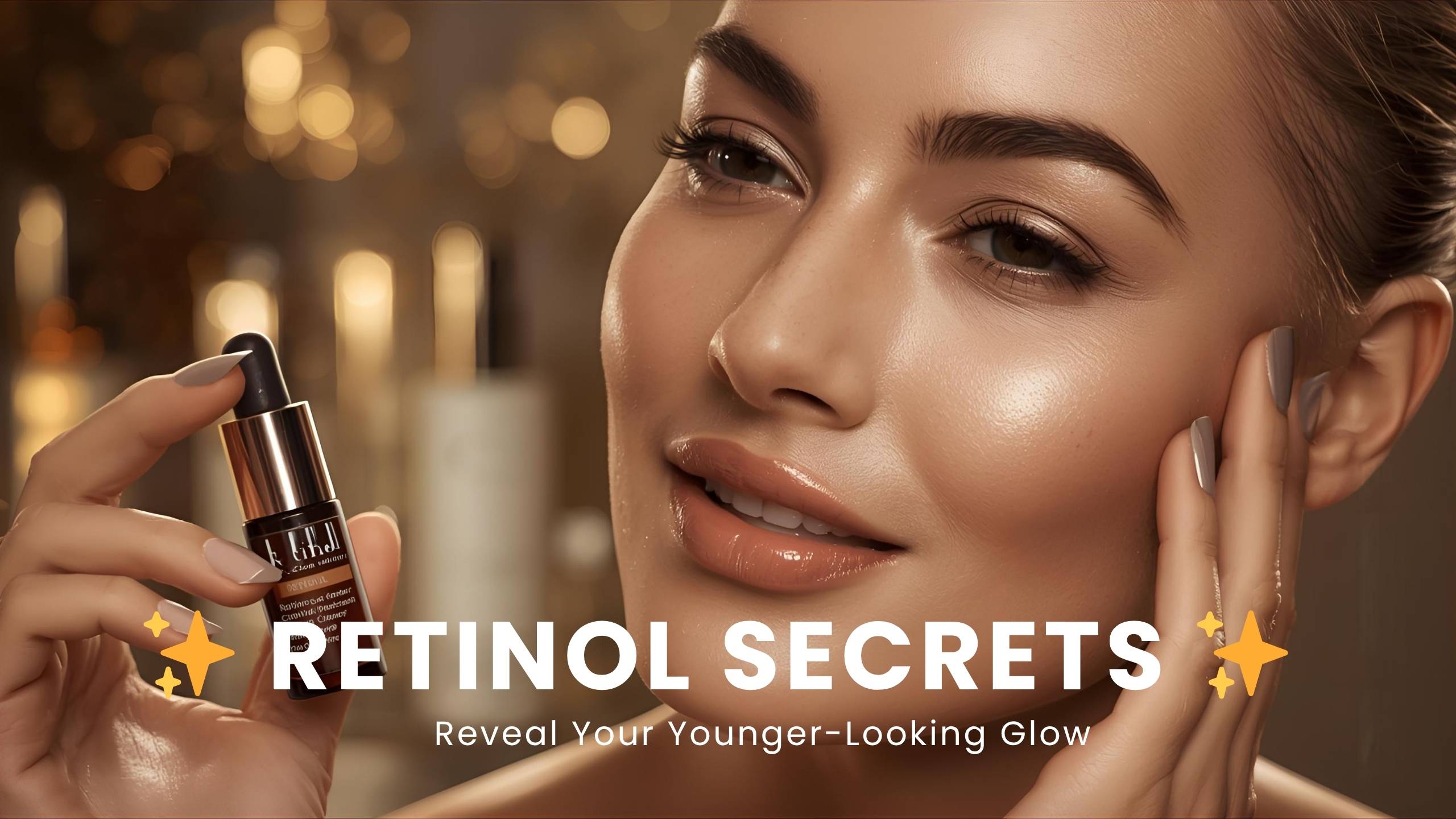
Retinol Secrets: How This One Ingredient Can Give You a Younger-Looking Glow
“Does retinol really make you look younger?” – The Truth Behind the Hype
When we ask “Does retinol really make you look younger?”, the short answer is: yes—under the right circumstances, with consistent use and realistic expectations. But it’s not magic and it’s not instant. Leading dermatologists call Retinol a gold-standard anti-aging ingredient. Cleveland Clinic ABC News Byrdie
In this article we’ll explore how retinol works, whether it truly reduces visible signs of aging, what the research and dermatologists say, how to incorporate it correctly, and what limitations you should understand.
How Retinol Works: The Science of Skin Renewal
What is retinol?
Retinol is a derivative of vitamin A. It’s an over-the-counter type of retinoid, meaning it’s less potent than prescription retinoids but still effective for many. Stanford Medicine Dermatology of Seattle & Bellevue
How it acts on skin:
- It boosts skin cell turnover – meaning old skin cells are shed faster and replaced by newer ones. Byrdie
- It supports collagen production – collagen is the protein that gives skin its firmness and youthful bounce. With age, collagen declines. Retinol helps stimulate its renewal. Westlake Dermatology & Cosmetic Surgery®
- It improves texture, tone, pores – by smoothing rough patches, unclogging pores, and fading discoloration. Byrdie
In other words: over time, retinol helps skin look smoother, clearer, firmer — the visible hallmarks of “younger” looking skin.
Does Retinol Make You Look Younger? What Dermatologists Say
Yes—when used appropriately. For many people, retinol does lead to visible improvements consistent with younger-looking skin. Here’s what the evidence and experts tell us:
✅ What works
- According to Stanford Medicine: “retinol has been around for decades and is a go-to skin-care solution for dermatologists” and does reduce wrinkles, sun damage, enlarged pores. Stanford Medicine
- The Cleveland Clinic notes that retinol “increases skin cell production … increases collagen … which can reduce the appearance of fine lines and wrinkles, giving your skin a fresher, plump appearance.” Cleveland Clinic
- A recent guide by Women’s Health calls retinol “the gold-standard anti-aging ingredient… one of the most effective ingredients available.” Women’s Health
⚠️ Important qualifiers
- Results take time. Retinol doesn’t turn back time overnight. Significant visible change typically takes many weeks to months. Cleveland Clinic
- Start slowly & build up. Because it can irritate, sensitivity must be managed. New users should apply less frequently at first and increase as tolerated. Byrdie
- Not all “look younger” claims are equal. Deep wrinkles, severe skin damage, or major sagging may not be fully reversed by retinol alone. In those cases a stronger prescription retinoid or procedural treatment may be needed. Dermatology of Seattle & Bellevue
Our takeaway: Yes, retinol can make you look younger—smoother, firmer, more even skin tone—but it works best as part of a consistent skincare routine, under realistic expectations, and not in isolation.
How to Use Retinol for Younger Looking Skin – Best Practices
Using retinol correctly is critical if you want the benefits without the pitfalls. Here’s how we recommend doing it:
🔹 Step-by-Step Routine
- Cleanse gently at night. Use a mild cleanser to prep the skin.
- Apply retinol. Start with a small amount (pea-sized) once or twice a week for beginners. Byrdie
- Moisturize. Apply a hydrating non-active moisturizer after, or layer a moisturizer before the retinol if your skin is sensitive. It helps buffer irritation. Westlake Dermatology & Cosmetic Surgery®
- Use sunscreen the next day. Since retinol makes skin more light-sensitive, daily SPF is non-negotiable. Cleveland Clinic
🔹 Tips & Warnings
- Introduce slowly. New users: every third or fourth night. Increase as tolerated. ABC News
- Avoid mixing with too many strong actives. Using strong exfoliants (like AHAs/BHAs), benzoyl peroxide or vitamin C at the same time can aggravate irritation. Consider alternating nights. Byrdie
- Pregnancy & breastfeeding warning. Many dermatologists advise caution or avoidance of retinol during pregnancy. Cleveland Clinic
- Patience is key. Visible changes often appear after 3-6 months of consistent use. If you stop, benefits may fade. Westlake Dermatology & Cosmetic Surgery®
By following these steps, you stack the odds in your favour: better chance of seeing younger-looking skin and lower risk of irritation or setbacks.
Limitations & What Retinol Doesn’t Do
While retinol is powerful, it’s important to be realistic about what it cannot achieve on its own:
- It won’t fix major sagging or deep skin laxity. When skin has lost significant volume or elasticity, procedural treatments (laser, radio-frequency, surgery) may be necessary.
- Results are gradual and subtle. If you expect drastic transformation in a week—you’ll likely be disappointed. Retinol works by cumulative improvement.
- Over-use or misuse can backfire. If you apply daily without building tolerance, you risk redness, flaking, barrier damage—counter-productive to “younger looking” skin. InStyle
- It’s one part of the toolkit. Younger-looking skin also benefits from sun protection, good nutrition, sleep, and avoiding smoking. Retinol isn’t a substitute for overall healthy skin practice.
Understanding these limits keeps your expectations grounded—and sets you up for more sustainable results.
FAQs
Q1: How soon will I see results from retinol?
Most users start to notice smoother texture and slightly less visible fine lines after 8-12 weeks of consistent nightly use. Bigger changes (collagen boost, deeper wrinkle reduction) may take 3-6 months or more.
Q2: Can everyone use retinol?
Generally yes if skin is healthy, but retinol may not be ideal for those with extremely sensitive skin, active eczema or rosacea flare-ups, or pregnant/nursing individuals (consult dermatologist). ABC News
Q3: Can retinol make me look older?
No—when used properly it won’t age you. But misuse (too strong, too frequent, no sun protection) can provoke irritation, which can give the appearance of tired, damaged skin. InStyle
Q4: Does stronger mean better—should I jump to prescription retinoids?
Stronger does not always mean better if your skin isn’t ready. Over-the-counter retinol is the gentler starting point. Prescription retinoids may be appropriate for deeper wrinkles or resistant skin concerns—but under dermatologic supervision. Dermatology of Seattle & Bellevue
Q5: Should I pair retinol with other treatments?
Yes—but carefully. Hydrating ingredients (hyaluronic acid, ceramides) support barrier health. Alternate strong actives rather than stacking them the same night. Always apply sunscreen in the morning. Cleveland Clinic
Using retinol intelligently gives you a strong chance of achieving visibly younger-looking skin—smoother surface, more even tone, reduced lines, better texture. If you commit to consistency, protect yourself from the sun, and understand it’s a process, you’ll align with what dermatologists call the “gold standard” yet treat it as a long game.
🔗 Our blogs:
- Best Retinol Creams for Wrinkles in 2025 – Top Picks
- How to Get Glass Skin Without Expensive Products
- The Secret to Glowing Skin: Start Your Beginner-Friendly Retinol
🔗You also like these:
- Allure – Best Face Massagers of 2025
- Byrdie – Expert Review of Microcurrent Devices
- Vogue-Best Facial Tools For a Glowing, Sculpted Complexion
P.S. if you like the post share it with